Exchange custody
Self-Custody Fundamentals
Holding Your Own Bitcoin, Without Rushing the Part That Matters.
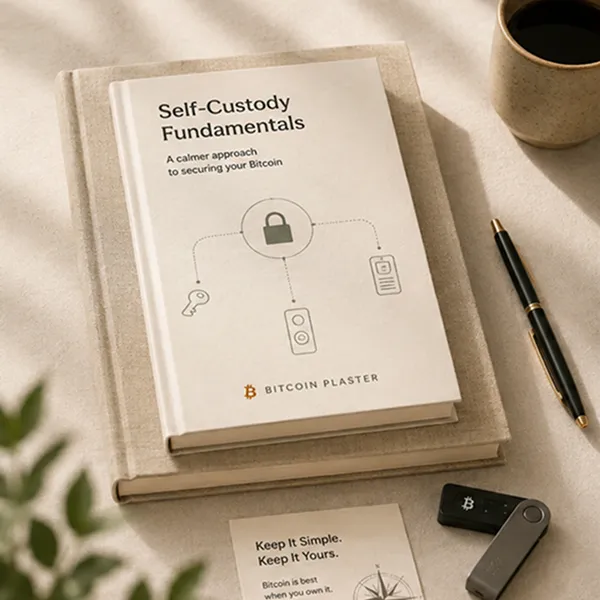
Self-custody means you, and only you, control the keys to your Bitcoin. It removes the risk of someone else losing your coins, and replaces it with the responsibility of not losing them yourself. This page explains what that shift really involves, and how to take it on carefully.
- Bitcoin-only
- Calm preparation
- Responsibility first
The core idea
What changes when you hold your own keys.
On an exchange, your Bitcoin is an entry in someone else's database. In self-custody, it is secured by a key only you hold. Both have real risks, they are just different risks, and they sit in different hands.
Self-custody
You hold the keys.
Foundations
Four things to understand before holding your own keys.
You do not need to be technical. You do need a clear mental model of these four ideas before you install wallet software or buy hardware.
-
Keys, not coins
You don't store Bitcoin, you store the private key that controls it. Whoever holds the key holds the coins.
-
The seed phrase
A list of words that can recreate your wallet anywhere. It is the master backup, and the single biggest thing to protect.
-
Backups that survive
Paper burns and fades. A backup has to outlast fire, water, and time, and you have to be able to find it.
-
Hardware wallets
A device that keeps your key offline and signs transactions without exposing it. The practical standard once stakes are real.
Learning path
Self-custody guides by stage.
The self-custody section now works like the other major website sections: foundations first, then moving off exchange, then wallet and backup readiness.
Self-custody foundations
Start here if you are moving from exchange custody toward holding your own keys. These pages define the control tradeoff before any device or backup decision.
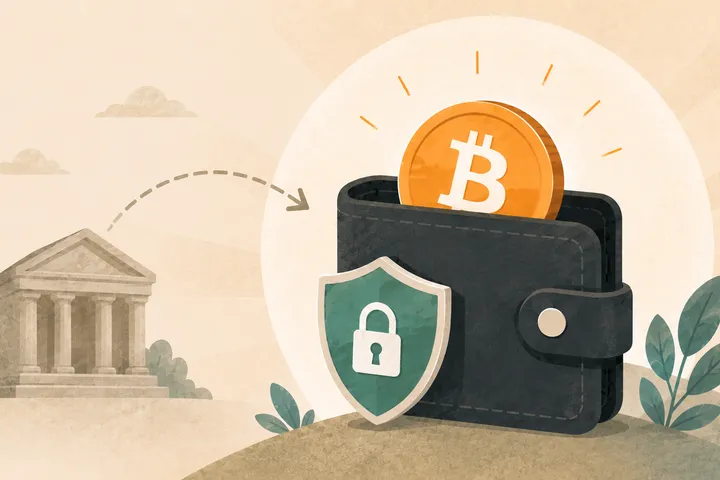
What Bitcoin self-custody actually means
Understand what changes when you hold the keys yourself, and why custody is a responsibility shift rather than a feature.
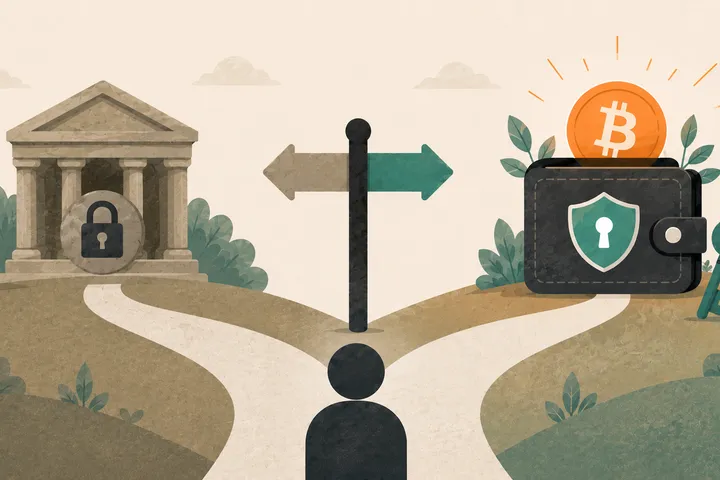
Custodial vs non-custodial wallets
Compare convenience, control, recovery, and risk so the custody choice becomes explicit instead of assumed.
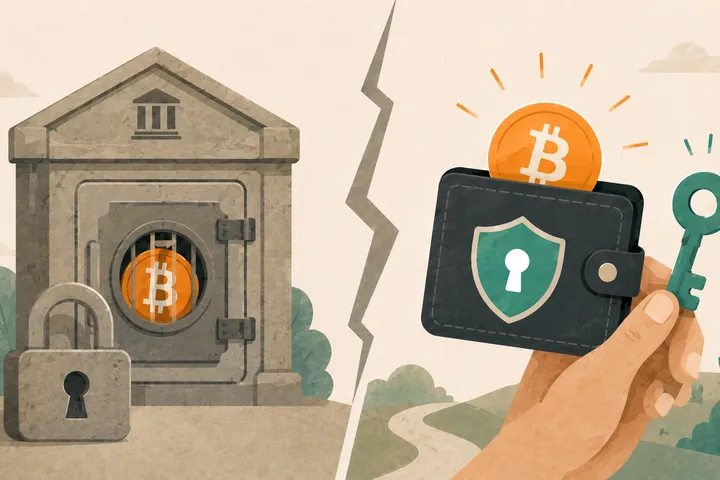
Bitcoin wallet vs exchange
See the practical difference between an account on an exchange and a wallet controlled by your own keys.
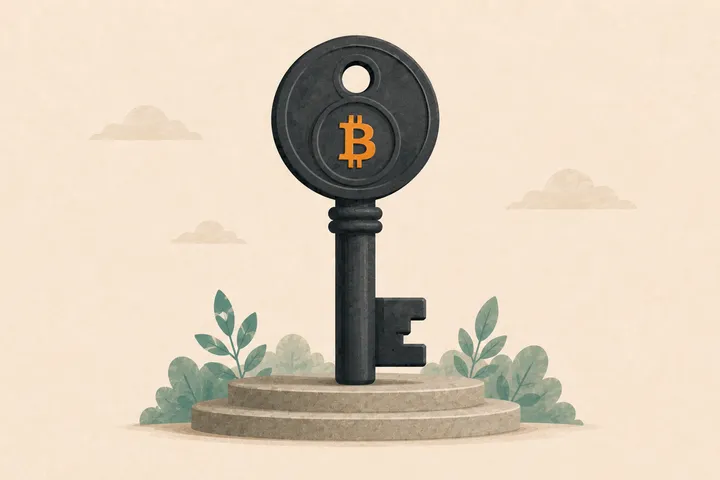
Bitcoin self-custody responsibilities
Learn the responsibilities that remain after you take control: backups, recovery, transactions, devices, and inheritance planning.
Move Bitcoin off exchange
Use these pages when the question changes from understanding self-custody to actually moving Bitcoin into your own setup.
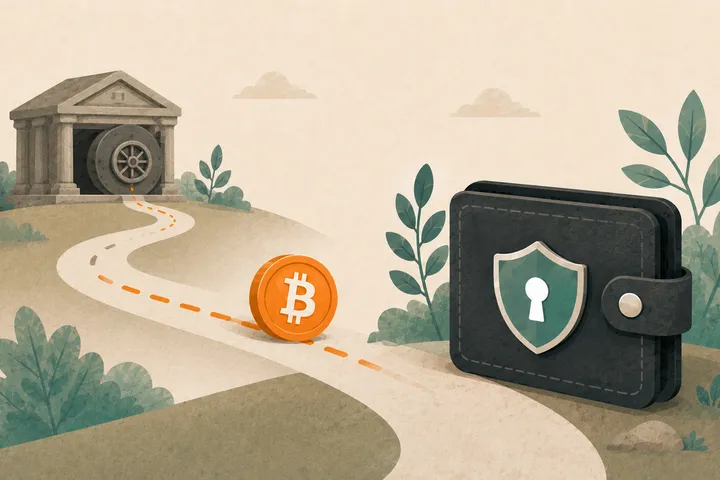
How to move Bitcoin off exchange safely
A practical migration path for leaving exchange custody without rushing the riskiest steps.
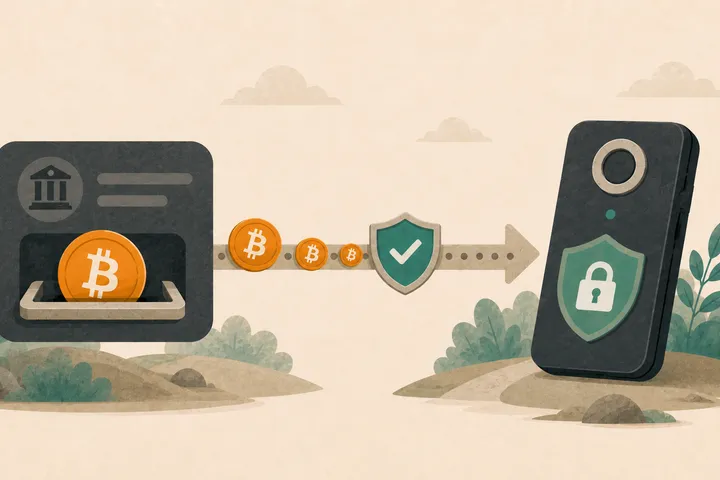
How to withdraw Bitcoin to a hardware wallet
Use a hardware wallet receiving address, verify it carefully, send a test transaction, and only then move more.
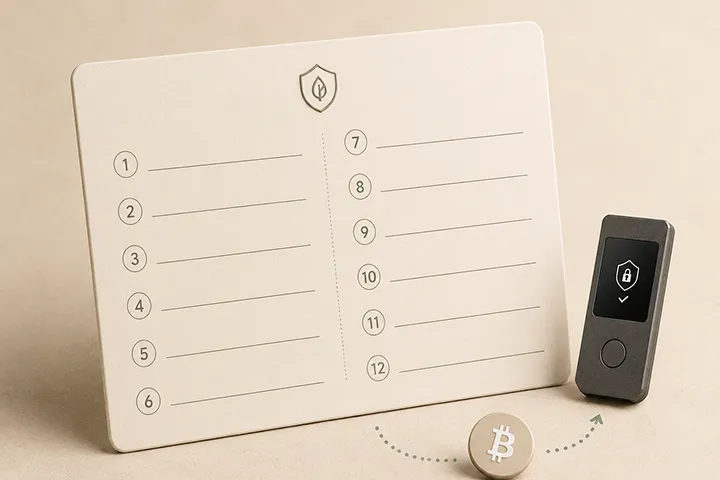
Seed phrase storage
Once you hold your own keys, your backup becomes the recovery boundary. Store it before you rely on it.
Wallet readiness and setup
Use these guides when you are deciding whether a hardware wallet is needed, which wallet layer fits, and how to set one up without treating the device as the whole plan.
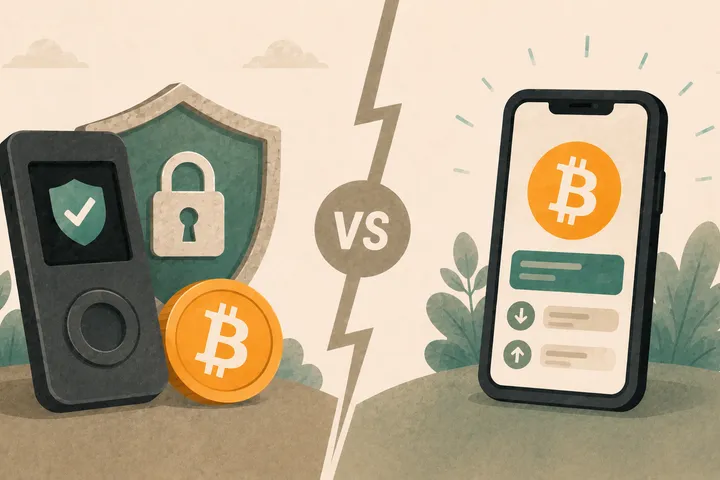
Hardware wallet vs software wallet
Decide which wallet layer fits the amount, risk, and recovery job in front of you.
Do you need a hardware wallet for Bitcoin?
See when a hardware wallet becomes the practical standard, and when learning with smaller amounts may come first.
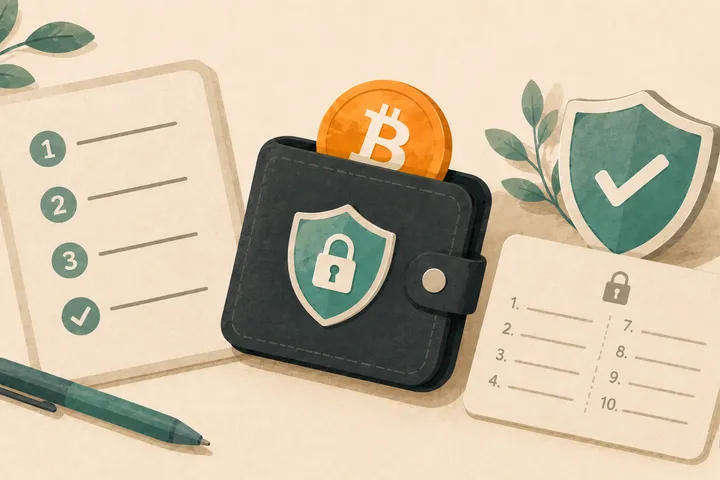
How to set up a Bitcoin hardware wallet safely
Walk through the setup layer after you understand the custody job, backup boundary, and transaction habits.
Avoidable mistakes
Where self-custody usually goes wrong.
Almost none of the common failures are exotic attacks. They are ordinary, human, and preventable, which is the good news.
-
Storing the seed phrase digitally.
A photo, a notes app, or a cloud document turns an offline secret into an online target. Keep it off any connected device.
-
Never testing recovery.
A backup you have never restored from is a guess. Confirm it works before you rely on it, not after you need it.
-
Moving everything at once.
Withdrawing the full balance before sending a small test is how a single wrong address becomes a permanent loss.
-
Buying hardware from the wrong place.
A device from an unofficial reseller can arrive tampered with. Buy from the manufacturer, and verify it is sealed.
-
No plan for the unexpected.
If only you can access the wallet and something happens to you, the coins are gone. Inheritance planning is part of custody.
Common questions
Self-custody, answered plainly.
The questions we are asked most, without the jargon.
Contact & correctionsA lost seed phrase usually means lost access to your Bitcoin. There is no recovery desk or password reset, so secure storage and a tested backup process are part of custody from the start.
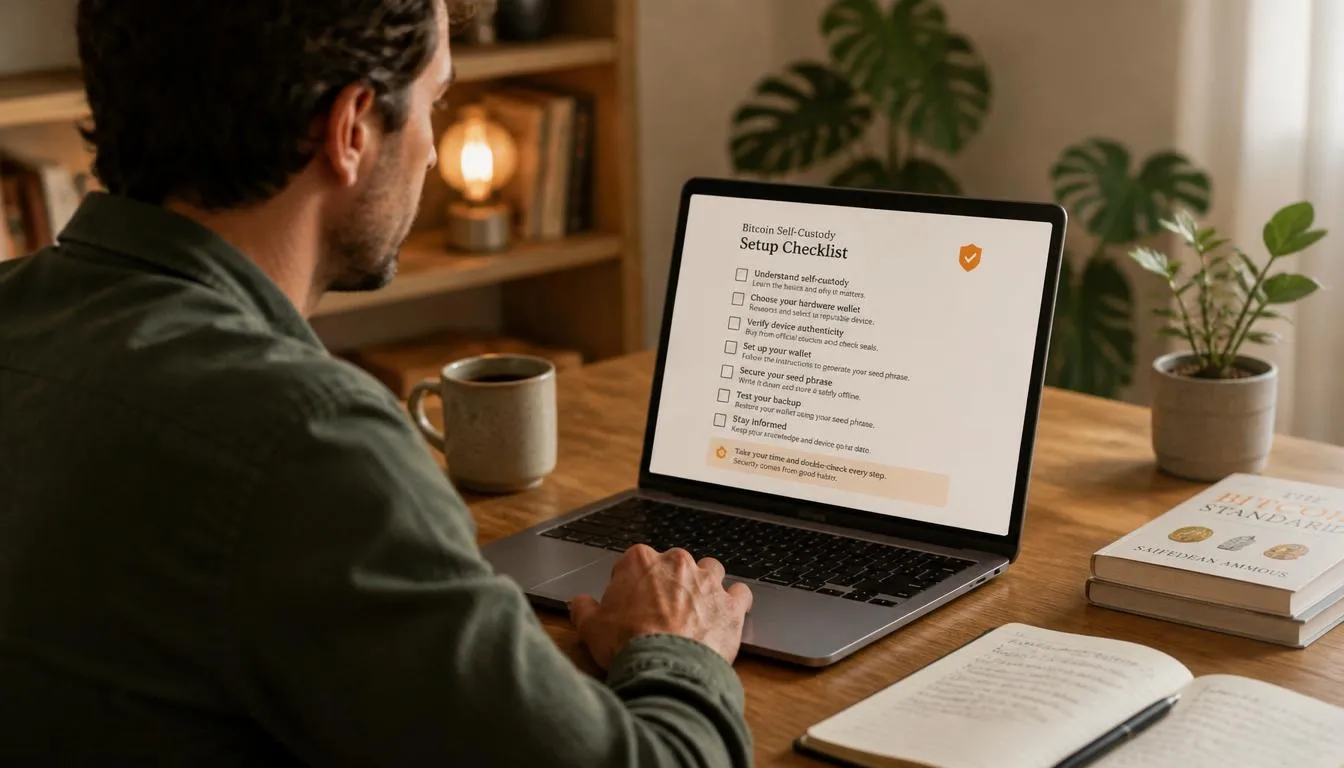
Get the first hardware wallet setup checklist
A calm setup checklist for Bitcoin holders who want to move toward self-custody without rushing the process or missing basic safety steps.