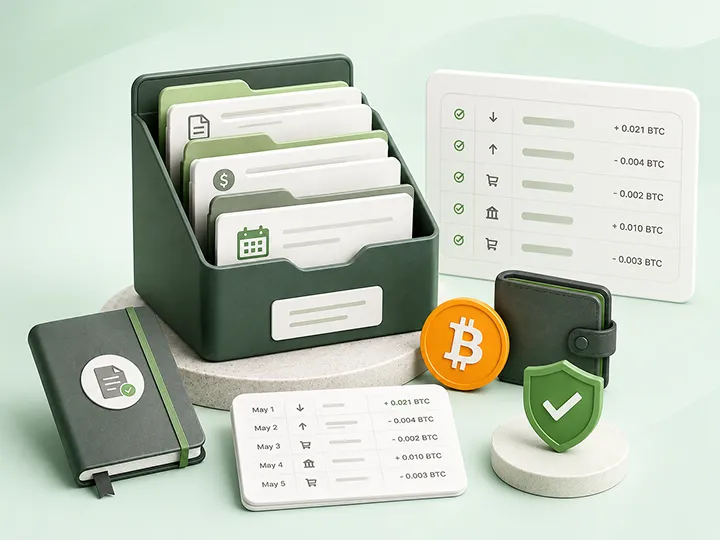
Bitcoin tax records
Use the field guide and checklist for the facts every Bitcoin record should preserve.

Enter your email to receive the free PDF checklist.
Read our Privacy Policy. For subscriber questions or corrections, use the Contact & Corrections page.
Bitcoin Tax Software
Cost basis sounds more complicated than it is. For a Bitcoin holder, the useful way to think about it is simple: cost basis is part of the factual record of what your Bitcoin cost when you acquired it. That record matters later because any software, spreadsheet, or qualified professional reviewing your history needs a starting point - and if the starting point is missing, incomplete, or disconnected from your wallet history, the rest of the review becomes harder to support.
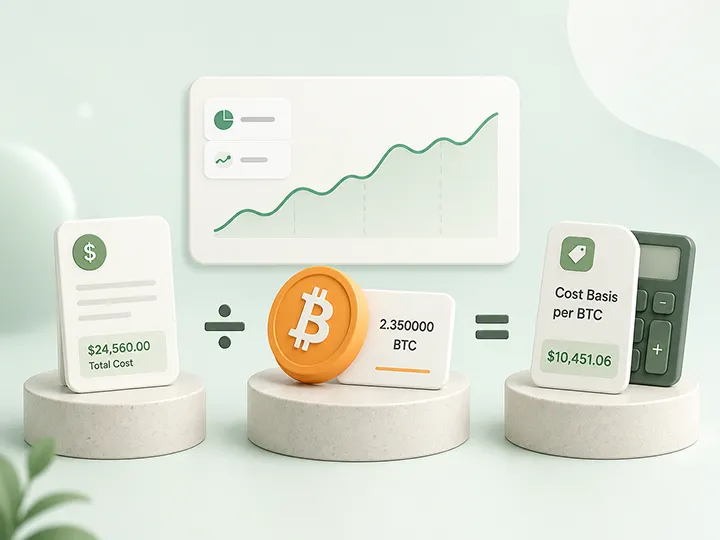

Cost basis sounds more complicated than it is. For a Bitcoin holder, the useful way to think about it is simple: cost basis is part of the factual record of what your Bitcoin cost when you acquired it. That record matters later because any software, spreadsheet, or qualified professional reviewing your history needs a starting point - and if the starting point is missing, incomplete, or disconnected from your wallet history, the rest of the review becomes harder to support.
The core distinction is this: cost basis is an input, not a verdict. Your records preserve facts; they do not decide how those facts are treated. This page is the concept page for cost basis - what it is at the recordkeeping level and which facts support a later review. It does not calculate anything and it does not recommend a method. It is educational only, not tax, legal, or financial advice; rules vary by jurisdiction and change over time, and your situation may require qualified review. For the scope of the lane, read the Bitcoin tax disclaimer; for the map, start at the hub.
Cost basis is the record of what was paid, or otherwise assigned, when Bitcoin entered your control. For a simple purchase, that usually means preserving the date and time, the amount of Bitcoin, the source-shown value at the time, the fees, and the platform or source where the acquisition happened.
That is where this page stops and stays. It does not tell you how to calculate anything, which method applies, or how any figure is reported - those are downstream questions that depend on rules outside this page. The recordkeeping point is narrower and entirely within your control: preserve what happened, when, how much, the value and fees shown by the source, where it came from, and enough context to connect that acquisition to later movements. Cost basis matters because it is one of the factual inputs later review may need; if the input is missing, the later output is less supported - no matter how confident the software looks.
People often hear "cost basis" and assume they are already inside tax-calculation territory. That assumption is where a lot of avoidable confusion starts. Cost basis, at the layer this page cares about, is not a calculation, a method choice, or a decision about what you owe. It is a fact you preserve - one piece of the raw material that a later calculation or interpretation will use.
Staying one layer earlier is what protects you. Before anyone can interpret the rules, the facts have to exist in a usable form, and the moment to secure those facts is when the acquisition happens - not when a tax deadline forces a reconstruction. This is the same records-before-tools logic that runs through the whole lane: a tool is downstream of your records, and so is a professional. Get the input right and the later layers have something solid to work from; skip it and every later layer inherits the gap. Cost basis is not the final answer - it is the input that makes a defensible answer possible later.
For any acquisition, a later review is far easier to support when you have preserved:
If any of these is missing, mark it "uncertain - needs review" rather than inventing a number. That single habit keeps the record honest for whoever reviews it later, and it turns a hidden gap into a visible, reviewable one. A clean-looking figure with no source behind it is weaker than an explicitly-marked gap.
Recurring buys are simple behaviourally and harder from a recordkeeping angle, because each buy is its own acquisition record. Buy every week for two years and you did not create one purchase - you created many, each with its own date, amount, source-shown value, fee, and source.
That is not a problem if you preserve the data as it happens. It becomes a problem when the history has to be reconstructed later from partial exports, bank records, or memory. The specific trap to avoid: treating a vague average purchase price in a personal note as if it were a source record. An average may help you understand your position at a glance, but it is not the same thing as the underlying records, and later software or qualified review may need the actual record behind each acquisition. Treat every recurring buy as its own record, kept while the source is still easy to reach.
This is the cost-basis version of a problem that shows up across self-custody. While Bitcoin sits on an exchange, the exchange may show purchases, withdrawals, fees, and account records in one system. Once you withdraw to your own wallet, that system no longer sees the full story: the exchange may show Bitcoin leaving, the wallet may show it arriving, the blockchain may show a transaction - but none of those, alone, necessarily explains which purchase history belongs to the coins, whether the receiving wallet is yours, or why they moved.
The Bitcoin did not lose its history; the record trail became split across systems, and the acquisition context - the cost-basis input - is the part most likely to be left behind. Your job is to preserve the connection between the acquisition record and the later wallet movement. (This page treats the cost-basis angle of that split. For the movement boundary itself, see wallet transfer vs taxable event; for how exchange and wallet records complement each other, see exchange CSV vs wallet history.)
Consider a common situation. A holder buys Bitcoin weekly on an exchange for a year, then withdraws the whole stack to a hardware wallet, and later moves part of it to a second wallet. Each weekly buy has its own acquisition record on the exchange. After the withdrawal, the wallet shows coins arriving - but the wallet does not carry the purchase prices from those weekly buys. If only the wallet history is later handed to software, the coins can look like they arrived with no known acquisition cost, and the tool may flag missing basis or treat the receipt as if the coins appeared from nowhere.
Nothing is wrong with the coins. The buys are fully documented on the exchange. What was not preserved is the link between those acquisition records and the later wallet movement. This page decides no treatment - it shows why that connection is the thing to keep, and why keeping it is far easier at the moment of the withdrawal than a year later.
Software can organize records, match imported transactions, and calculate from the information it receives - genuinely useful when inputs are clean. But it depends on your records: it cannot reliably replace missing acquisition history, know a wallet you never added, or understand a transfer without labels. The risk is a report that looks organized but rests on missing context. The tool may calculate; the records tell the tool what it is calculating from. (For what a tool can and cannot do, see what tax software can and cannot do; for how it goes wrong, see Bitcoin tax software limitations.)
A basics page should not pretend to handle cases that require judgment. Cost basis may need qualified review when old exchange records are missing, multiple platforms were used over several years, coins were received rather than purchased, wallet and exchange history do not line up, records were reconstructed after the fact, treatment depends on facts this page cannot evaluate, or the amount is large enough that guessing would be irresponsible. Bitcoin Plaster can help explain the recordkeeping layer; a qualified professional handles the application of rules to your situation. (See when to use a tax professional.)
They do not choose a method, determine treatment, replace software or a professional, or fix missing history by themselves. They preserve facts and help you see what you have and what may be missing. Cost basis is a recordkeeping concept before it is anything else, and this page keeps it there on purpose.
Start with your acquisition records. For each, ask: when did I acquire it, how much Bitcoin, what source record shows it, what value and fee did the source provide, where did it go afterward, and is there a label explaining the movement? Then do the same for later movements. The goal is not to become a tax expert - it is a clean factual trail that answers one practical question: can someone understand what happened without guessing? If yes, later software use and professional review are far easier to support. If no, do not guess - identify the gap, mark it, and decide whether it needs better records, better labels, or qualified help. (For the full field-by-field record guide, see Bitcoin tax records.)
What is Bitcoin cost basis in simple terms? The factual record of what your Bitcoin cost when you acquired it, or what was otherwise assigned to it when it entered your control. It is an input for later review; it does not decide treatment by itself.
Is cost basis the same as the price I paid? For a simple purchase, the price paid is usually the core record. Preserve fees and source records too, because those details may matter later. This page does not tell you how any fee is treated.
Do I need cost-basis records if I have never sold Bitcoin? Keeping records early is easier than reconstructing them later. Even without a disposal, acquisition records can matter if the coins later move or are reviewed. Whether anything becomes reportable depends on your situation and rules.
Does moving Bitcoin to self-custody change my cost basis? This page gives no treatment conclusion. The recordkeeping point is that moving to self-custody can split the visible record across an exchange, wallet history, and the blockchain - so preserve the original acquisition record and label the movement clearly.
Can tax software figure out cost basis automatically? Only from the data it receives. It can organize and calculate from imported records, but it cannot reliably replace missing acquisition history, missing wallets, or missing labels.
Which cost-basis method should I use? This page does not recommend a method. Which methods exist, what applies, and what records are required depend on the rules for your situation - that is a question for a qualified professional, not a basics page.
What records should I keep for Bitcoin cost basis? For each acquisition and later movement: date, time, amount, source-shown value where available, fees, source, destination, transaction ID if available, and a clear label - plus an "uncertain, needs review" marker wherever a fact is missing. For the broader field guide, see Bitcoin tax records.
Use the field guide and checklist for the facts every Bitcoin record should preserve.
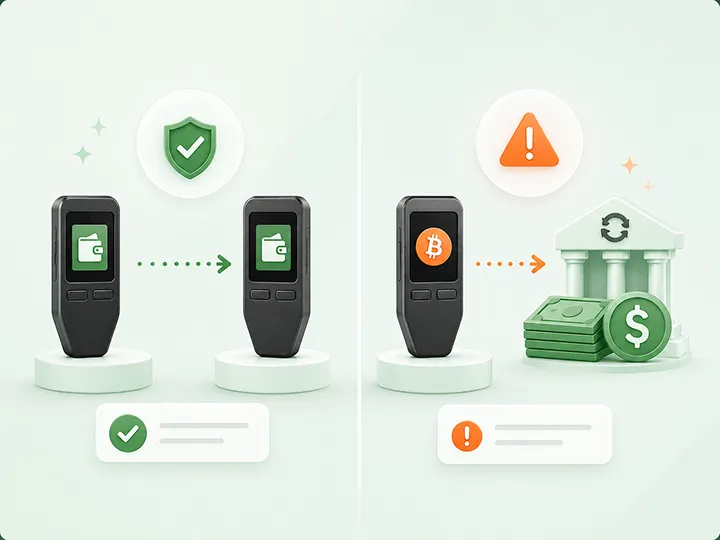
Preserve the facts a wallet movement needs without turning records into treatment conclusions.
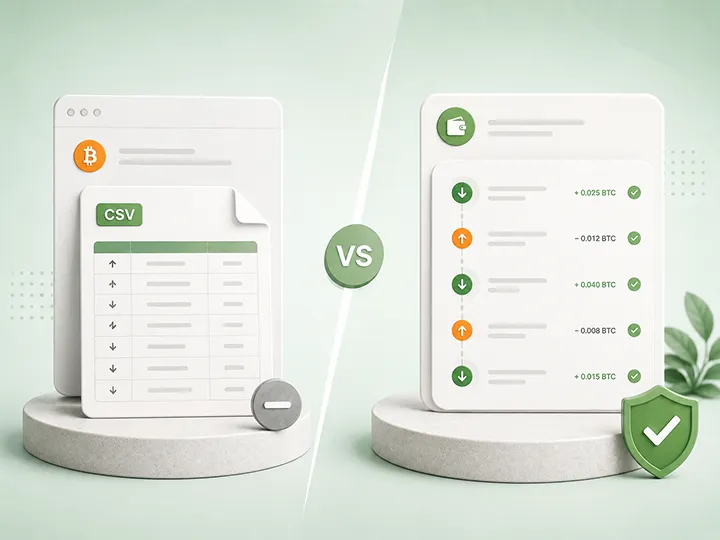
Reconcile exchange exports, wallet history, on-chain records, and your own labels.
Separate recordkeeping work from judgment questions that may need qualified review.