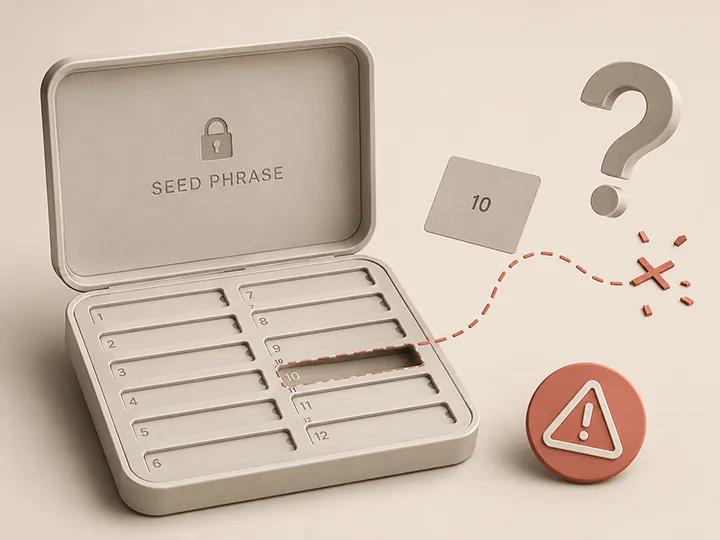
Seed Phrase Storage

What If Someone Finds Your Seed Phrase? How To Think About Exposure Risk

If someone may have seen, copied, or found your Bitcoin seed phrase, learn how to judge the risk, what to avoid, and why the secret cannot simply be changed.

  • Exposure scenario
  • Safety calibration
  • No active-response guide
Seed phrase storage thumbnail showing a seed phrase card, metal backup plate, hardware wallet, and security icons.
Frederick Staunch avatar

Author and experience

Written by Frederick Staunch

Frederick Staunch is the pseudonymous editor of Bitcoin Plaster. He teaches the Bitcoin Holder Standard: money literacy, the Bitcoin thesis, holder psychology, and self-custody for people who want to hold Bitcoin without expensive mistakes.

Bitcoin self-custody and key control

Hardware wallet setup and testing

Recovery and backup planning

Bitcoin-only product evaluation

Bitcoin tax-record workflows and tax-software evaluation

Money literacy and sound money

Holder psychology and volatility

Quick answer

Take possible exposure seriously without panicking.

If someone may have copied, photographed, found, synced, or digitally accessed your seed phrase, treat the phrase as compromised.

If someone may have copied, photographed, found, synced, or digitally accessed your seed phrase, treat the phrase as compromised.

A seed phrase cannot be made secret again by re-hiding the paper, changing a wallet PIN, changing an app password, or deleting one visible copy.

A brief glance by someone with no understanding and no opportunity to record the words is lower risk than a copied or photographed phrase. Lower risk is not zero.

1

Do not check exposure by exposing it again

Do not type, photograph, scan, upload, email, cloud-store, password-manager-store, AI-tool-enter, or paste your real seed phrase while trying to check exposure.

2

Treat digital copies as hard to bound

Files, photos, notes, messages, and backups can sync or spread in ways you may not see.

3

Use a deliberate plan for real exposure

The conceptual safety path for real exposure is a new setup controlled by a new never-exposed seed phrase, planned through official wallet documentation.

Safety boundary

Do not use exposure checking to create another exposure.

Do not type, photograph, scan, upload, email, cloud-store, password-manager-store, AI-tool-enter, or paste your real seed phrase while trying to check exposure. Do not use a tool to check whether the phrase is compromised. Entering the phrase into a tool is itself exposure.

Do not put secrets into documents

  • a computer file
  • an online document
  • a legal document
  • a will document
  • a trust document
  • a shared note

Do not put secrets into connected tools

  • a website
  • a phone camera
  • a password manager
  • cloud storage
  • email
  • connected software

Do not send secrets to people or services

  • chat apps
  • AI tools
  • random recovery tools
  • seed checkers
  • recovery services
  • unknown support agents
  • public forums
Seed phrase safety thumbnail showing unsafe digital and casual storage locations to avoid.

Exposure-risk calibration

A seed phrase is not like a password you can simply change.

If you think someone may have seen, copied, photographed, found, synced, or accessed your Bitcoin seed phrase, take the concern seriously.

That does not mean you should panic. Panic is where people make the next mistake: typing the phrase into a website, trusting a recovery service, downloading a random tool, calling fake support, or confronting someone before they understand the risk.

A seed phrase is not like a password you can simply change. If someone has a faithful copy of it, they may be able to recover the wallet without your device, PIN, or permission.

This page helps you think clearly about possible exposure. It does not provide active-theft response, transaction instructions, wallet migration steps, forensic guidance, legal guidance, or device-specific recovery instructions.

  • Understand what counts as exposure.
  • Avoid unsafe checks and recovery services.
  • Use official wallet documentation and an emergency plan for wallet-specific action.

Why exposure matters

If another copy exists, that copy can keep working.

A seed phrase is the recovery secret for a wallet. If someone has the phrase, they may be able to recreate the wallet elsewhere.

They do not need your hardware wallet. They do not need your app. They do not need your PIN. They do not need to be in the same room.

That is why possible exposure matters even if nothing has happened yet.

A person who copied the phrase does not have to act immediately. They could act later. They could misunderstand what they have now and learn later. They could share it with someone else. A file or photo could be accessed without you noticing.

No activity yet is useful information, but it is not proof of safety.

Concept block

A seed phrase is not like a password.

A normal password can often be changed after a leak. The old password stops working, and the account keeps existing.

A seed phrase is different. The seed phrase is not just a login. It is the recovery secret that derives the wallet. If another copy exists, that copy can keep working as long as funds remain controlled by that seed.

Changing a device PIN does not fix seed phrase exposure. Changing an app password does not fix it. Moving the same paper to a better hiding place does not undo a copy. Deleting one photo does not prove there are no synced or backed-up copies.

Exposure scenarios

What someone found can mean different levels of risk.

Exposure exists on a spectrum. The point is not to calculate a perfect probability. The point is to avoid false reassurance and unsafe action.

Brief glance

Brief glance, no recording opportunity

  • Lower risk, but not zero.
  • Improve storage immediately so the same thing cannot happen again.

Copied or photographed

Someone may have photographed it

  • Treat as real exposure.
  • A photograph or written copy is exact enough to matter.

Found written backup

Someone found a written backup

  • Treat as real exposure if they could read or copy it.
  • Re-hiding the same paper does not restore safety.

Digital exposure

Seed phrase was stored digitally

  • Treat as high risk because access is hard to bound.
  • Deleting one visible copy does not prove there are no other copies.

Passphrase nuance

Seed phrase exposed, passphrase genuinely separate

  • Risk picture may change, but do not over-rely on it.
  • A passphrase only helps if it was not exposed with the seed phrase.

No activity yet

No suspicious wallet activity yet

  • Does not prove safety.
  • A copied phrase can be used later.
Seed phrase backup testing thumbnail showing a recovery phrase card and safety checklist.

Scenario 1

Someone saw it briefly.

A genuine brief glance is usually lower risk than a copied phrase.

Human memory is poor at capturing a long ordered list of words. A person who does not understand Bitcoin self-custody may not recognize what they saw. If there was no realistic opportunity to photograph, copy, or repeat the phrase, the risk is lower.

But lower risk is not zero. You may not know whether the glance was truly brief. You may not know whether a phone was involved. You may not know whether the person later realized what they saw or told someone else.

A sensible response is to improve storage immediately so the same thing cannot happen again. Whether the exposure requires a deeper response depends on the amount at stake, who saw it, whether they could record it, and whether any other secrets were exposed.

  • Do not ask the person to repeat what they saw.
  • Do not test them.
  • Do not create a new exposure while trying to investigate.

Scenario 2

Someone copied, photographed, or found the written backup.

This should be treated as real exposure. A photograph or written copy is exact enough to matter. If someone found your backup and had time to read, copy, or photograph it, the phrase may no longer be under your control.

This can happen through a family member finding a backup, a roommate or guest seeing it, a contractor or cleaner opening the wrong drawer, a landlord or maintenance worker accessing a space, a visitor noticing a note, a burglar finding a backup, or a misplaced envelope being read by someone else.

Trust matters personally, but it does not change the technical risk. If a faithful copy may exist, the seed phrase should be treated as compromised.

Re-hiding the same paper does not restore safety. The possible copy is the problem.

Seed phrase storage thumbnail showing a seed phrase card, metal backup plate, hardware wallet, and security icons.

Scenario 3

The phrase was stored digitally.

A digital copy should be treated as high risk.

Examples include a phone photo, screenshot, cloud note, online document, email, chat message, password manager entry, computer file, scanned document, AI prompt, or wallet backup stored in connected software.

Digital copies are difficult to bound. They may sync, back up, index, forward, persist, or remain recoverable in places you do not expect. Deleting one visible copy does not prove there are no other copies.

Do not try to verify safety by uploading or pasting the phrase somewhere else. That only creates another exposure. If the seed phrase has lived in a connected digital environment, treat it as potentially compromised.

Passphrase nuance

A passphrase may change the risk picture, but it does not erase the need for caution.

Some wallets use an optional passphrase in addition to the seed phrase. If you never set one up, do not assume you have one.

If you did use one, the exposure picture can change. A passphrase kept genuinely separate from the seed phrase may make the exposed seed words alone insufficient to reach the wallet you intended.

But this is not a reason to relax automatically. A passphrase only helps if it was not exposed with the seed phrase. If the seed phrase and passphrase were stored together, both may be compromised. If the passphrase is forgotten, mistyped, or not documented safely, it can create a loss problem of its own.

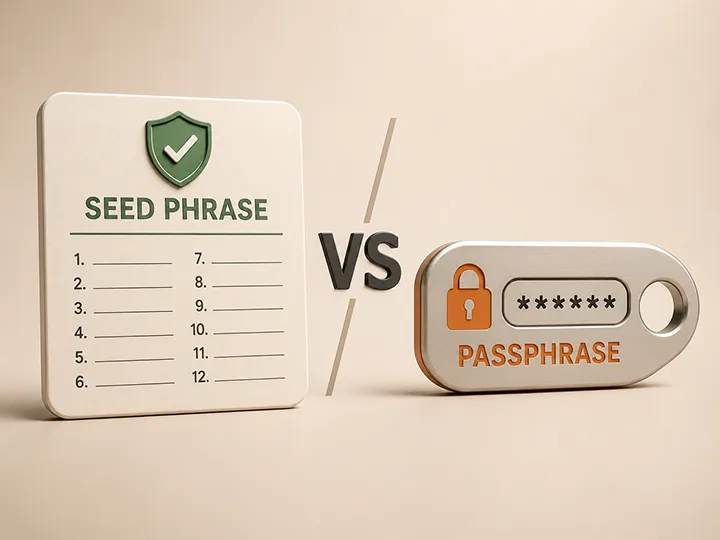
This page will not explain passphrase mechanics or setup. For the concept-level difference, read passphrase vs seed phrase.

Status check boundary

No suspicious activity yet does not prove safety.

You may be able to view your own wallet balance and recent activity through your own wallet software or normal safe viewing method, without entering the seed phrase anywhere new.

That can tell you whether something obvious has already happened. But it cannot prove that nothing will happen later.

If there is unauthorized activity, that confirms a problem. If there is no unauthorized activity, that does not prove the seed phrase is safe. A copied phrase can be used later.

Do not enter the seed phrase into a website, seed checker, AI tool, random wallet, browser extension, or recovery app to check its status. That is not checking. That is exposing.

What not to do

Avoid actions that make the situation worse.

No legitimate support interaction should require your real seed phrase. If someone asks for it, stop.

Do not expose it again

  • Do not enter the seed phrase into a website.
  • Do not use a seed checker.
  • Do not paste it into an AI tool.
  • Do not upload a photo.

Do not trust panic help

  • Do not send it to support.
  • Do not ask a forum to inspect it.
  • Do not trust unsolicited messages.
  • Do not use a recovery service.

Do not call weak fixes solved

  • Do not assume a PIN change fixes exposure.
  • Do not re-hide the same phrase and call it solved.
  • Do not give remote access to your device.
  • Do not make rushed wallet decisions while panicked.

Conceptual remediation

If a seed phrase is genuinely compromised, long-term safety cannot depend on that seed phrase anymore.

The conceptual fix is a new setup controlled by a new seed phrase that has never been exposed.

This page will not walk you through wallet setup, restore, transaction, migration, fee, address, confirmation, or device-specific steps. Those actions are high-stakes and depend on your wallet and situation.

The safe way to approach execution is to slow down, use official wallet documentation, avoid unverified tools, avoid anyone asking for seed words, prepare the new backup safely, and use an emergency recovery plan so you are not improvising.

Prevention routing

Why prevention matters more than panic

Most exposure scenarios come from ordinary storage mistakes. The goal is not to become paranoid. The goal is to design storage so exposure is less likely and recovery remains possible.

  • Ordinary storage mistakes

    Most exposure scenarios come from backups kept somewhere easy to find, near the wallet, photographed, or stored in connected systems.

  • Digital shortcuts

    Phone photos, cloud notes, email, password managers, scans, and AI prompts can turn a backup into a hard-to-bound exposure event.

  • Human recovery pressure

    A backup plan should handle family and emergency recovery without giving casual access to the secret too early.

  • Prepared response

    The goal is to design storage so exposure is less likely and recovery remains possible through a calm emergency plan.

Where this fits

This page handles exposure risk inside the seed phrase storage lane.

Other pages handle nearby problems: loss of access, passphrase confusion, emergency planning, safe verification, storage mistakes, and storage threat modeling.

  1. Loss of access is a different problem.

    What if you lose your seed phrase covers the opposite problem: loss of access rather than exposure of a still-existing secret.

  2. Passphrase risk needs its own explanation.

    A separate passphrase can change recovery and exposure risk, but it is not a remediation CTA and should not be overread as automatic protection.

  3. Emergency planning keeps response deliberate.

    If your seed phrase may already be exposed, start with an emergency recovery plan and official wallet documentation, not panic tools.

Seed phrase storage thumbnail showing a secure lockbox, backup card, metal plate, and checklist.

Storage prevention

Design storage so exposure is less likely and recovery remains possible.

Common patterns include keeping a backup somewhere easy to find, storing it near the wallet, photographing it, putting it in a cloud note, emailing it to yourself, using a password manager, giving access to someone who does not need it, leaving it visible during setup, or failing to plan for family and emergency recovery.

For broader prevention, read seed phrase backup mistakes. For location risk, compare storage at home and storage outside the home when those dedicated routes are live.

If your seed phrase may already be exposed, start with the emergency recovery plan and official wallet documentation. If you are planning ahead, start with backup mistakes, safe verification, and threat-model thinking.

Build an emergency recovery plan

Exposure-risk checklist

Simple exposure-risk checklist

Use this checklist without entering the seed phrase anywhere. The safer order is: stop, identify the exposure type, avoid creating new exposure, use official documentation, and act from a plan.

  1. Did someone only glance at it, or could they record it?

    A real copy or photo changes the risk picture more than a brief glance.

  2. Was the phrase photographed, copied, scanned, or written down by someone else?

    A faithful copy should be treated as real exposure.

  3. Was it ever stored digitally?

    Digital copies are difficult to bound because they can sync, back up, forward, persist, or remain recoverable.

  4. Was it ever sent through email, chat, cloud storage, ai tools, or a password manager?

    Those are connected exposure paths, not safe backup methods.

  5. Was a passphrase used?

    A genuinely separate passphrase may change the exposure picture, but it creates recovery risk of its own.

  6. If a passphrase was used, was it stored separately?

    If the seed phrase and passphrase were stored together, both may be compromised.

  7. Has anyone asked you to type the phrase into a website or tool?

    That request is a red flag, even if the page calls itself support, verification, recovery, or security help.

  8. Are you relying on “nothing happened yet” as proof of safety?

    Quiet activity does not prove there is no risk because a copied phrase can be used later.

  9. Are funds still dependent on a phrase that may be exposed?

    Exposure is not fixed by hiding the old words better.

  10. Do you have a calm emergency plan before taking wallet-specific action?

    The safer order is: stop, identify the exposure type, avoid creating new exposure, use official documentation, and act from a plan.

Bitcoin Plaster circular mark

Exposure-risk rule

Do not create a new exposure while trying to investigate an old one.

Stop, identify the exposure type, avoid unsafe checks, and act from official documentation and a prepared plan.

  • No active-response guide
  • No seed-checker routing
  • Official documentation boundary

Scope reminder

This is exposure-risk calibration, not a live incident guide.

This page does not provide wallet setup steps, wallet restore steps, transaction instructions, active-theft response, forensic guidance, confrontation advice, recovery-service recommendations, seed-checker guidance, malware detection instructions, or blockchain tracing workflows.

For wallet-specific actions, use official wallet documentation.

If the situation involves theft, coercion, legal issues, or personal safety, this general article is not enough.

FAQ

Seed phrase exposure questions

Concise answers about found seed phrases, copied backups, password misconceptions, passphrase nuance, quiet activity, and recovery-service risks.

If someone can read or copy your seed phrase, they may be able to recover the wallet without your device, PIN, or permission. A phrase that may have been copied or photographed should be treated as compromised.