Bitcoin-only hardware wallets

Verdict: if you only plan to hold Bitcoin, a Bitcoin-only hardware wallet is usually the cleaner starting filter. The label reduces scope and noise. It does not automatically prove that a device is the best choice.
The buying question is not just "is it Bitcoin-only?" The better question is: which Bitcoin-only wallet currently wins for this user, this setup path, this recovery skill level, and this long-term custody plan?
This page explains the Bitcoin-only label and then names the current Bitcoin Plaster winners by use case.
Affiliate disclosure: Official manufacturer store affiliate links. When you use a Blockstream link, your 10% discount will be applied automatically at checkout, and we may earn a commission as well.
Current Bitcoin-only winners
| Category | Winner | Why it wins | Action |
|---|---|---|---|
| Best overall Bitcoin-only pick | BitBox02 Bitcoin-only | Focused Bitcoin-only workflow and strong fit for long-term holders who want a clean setup path | Read BitBox02 review |
| Best Trezor touchscreen pick | Trezor Safe 5 Bitcoin-only | Trezor ecosystem with a larger touchscreen and Bitcoin-only firmware lane | Read Safe 5 review |
| Best budget Trezor Bitcoin-only pick | Trezor Safe 3 Bitcoin-only | Lower-cost Trezor route for buyers who do not need the larger touchscreen | Read Safe 3 review |
| Best air-gapped Bitcoin pick | Blockstream Jade Plus | Bitcoin-focused route for users who want the strongest Jade camera, screen, and repeatable QR workflow | Compare Jade models |
See the full hardware-wallet winner guide
What Bitcoin-only means
A Bitcoin-only hardware wallet limits the product scope to Bitcoin rather than presenting itself as a universal crypto device. Depending on the product, that may mean Bitcoin-only firmware, a Bitcoin-only edition, or a device ecosystem that keeps the Bitcoin experience separate from broader asset support.
For a Bitcoin holder, that narrower scope can be valuable. It can make setup quieter, reduce unrelated menu paths, simplify documentation, and keep attention on backup, verification, signing, firmware, and recovery.
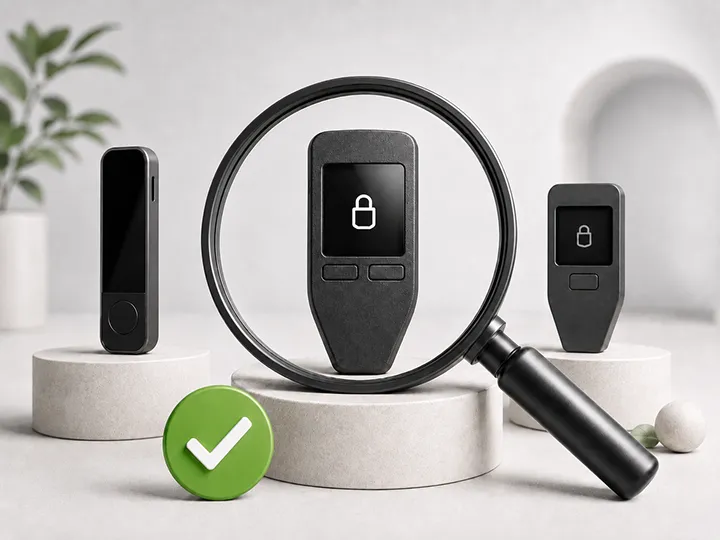
That does not mean every Bitcoin-only device is automatically better than every multi-coin device. The label is a filter, not proof.
Where Bitcoin-only helps
- Cleaner setup: fewer unrelated assets and fewer irrelevant choices during the first session.
- Clearer evaluation: the device can be judged against the Bitcoin custody workflow instead of a broad crypto feature list.
- Less distraction: a Bitcoin-only holder does not need token menus, staking prompts, NFT features, or broad asset marketing.
- Better long-term focus: the user can spend more attention on seed backup, recovery, address verification, firmware, and transaction signing.
What Bitcoin-only does not prove
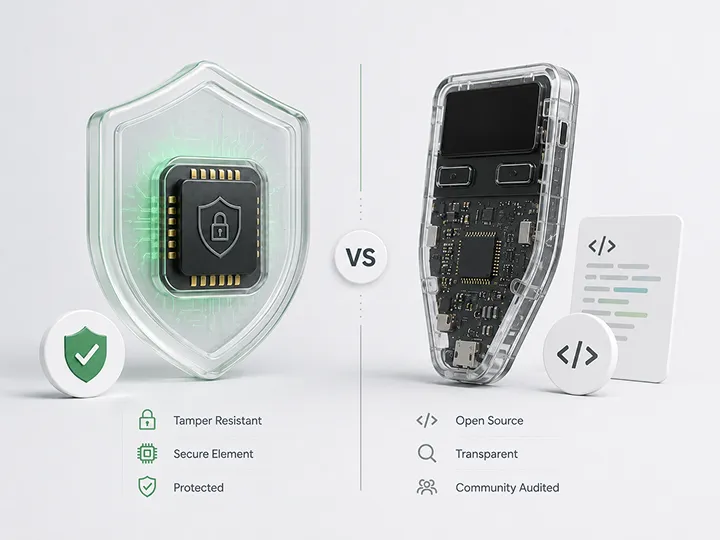
The label does not prove that the device has the best engineering, the clearest recovery path, the safest supply chain, the easiest interface, the strongest firmware process, or the best screen verification.
Most real mistakes are not solved by the label alone. People still lose seed phrases, expose backups, download fake apps, skip address checks, misunderstand passphrases, buy from weak sources, or approve transactions too quickly.
Bitcoin-only helps when it reduces noise. It fails when it becomes a shortcut around evidence.
Bitcoin-only vs multi-coin for a Bitcoin holder
| Question | Bitcoin-only wallet | Multi-coin wallet used only for Bitcoin |
|---|---|---|
| Focus | Narrower and easier to reason about | Broader product surface |
| Beginner clarity | Often cleaner if the user only holds Bitcoin | Can be clear, but unrelated features may distract |
| Security proof | Not guaranteed by the label | Not disqualified by the label |
| Best use | Bitcoin-only long-term holding | Users who need a specific ecosystem or already understand the tradeoff |
For a Bitcoin-only holder, the default bias should usually be toward a Bitcoin-only lane. But the final decision should still depend on the device, firmware, screen, backup workflow, support path, and the user's ability to recover calmly.
Who should start with BitBox02 Bitcoin-only?
BitBox02 Bitcoin-only is the current Bitcoin Plaster best overall Bitcoin-only pick because it keeps the product scope focused and fits the user who wants a clean long-term Bitcoin custody path without chasing every advanced feature at once.
It is strongest for holders who want Bitcoin-only focus, a guided setup feel, and a serious first device for long-term storage.
Skip it if your main requirement is a Trezor touchscreen, a QR-based air-gapped workflow, or the cheapest possible Trezor path.
Read the BitBox02 review Check BitBox02 at the official store
Who should choose a Trezor Bitcoin-only route?
Trezor Safe 5 Bitcoin-only wins when the buyer wants a stronger Trezor touchscreen experience. Trezor Safe 3 Bitcoin-only wins when the buyer wants a lower-cost Trezor path and does not need the larger touchscreen.
The Trezor lane makes sense for users who want the Trezor ecosystem and a clearer choice between budget and touchscreen priorities.
Read the Safe 5 review Check Trezor Safe 5 at the official store
Read the Safe 3 review Check Trezor Safe 3 at the official store
Who should consider the Blockstream Jade family?
Blockstream Jade Plus wins the air-gapped Bitcoin lane in this review set because its improved camera, larger screen, and better controls make repeated QR signing easier.
Blockstream Jade remains the value route for buyers who want USB-C, Bluetooth, camera-based QR signing, and the broader Jade workflow without prioritizing the smoother Plus interface. Jade Core fits a narrower connected-signing buyer who wants the larger screen but does not need a camera or battery.
None of the three is the simplest answer for every first-time buyer. Use the comparison when the Jade security model fits but the hardware and signing workflow are still undecided.
Compare the Blockstream Jade models Read the Blockstream Jade Plus review Check Blockstream Jade Plus at the official store
Check Blockstream Jade at the official store Check Blockstream Jade Core at the official store
How to use this page
Use Bitcoin-only as the first filter, not the final decision. The review links above should help you understand the device experience first; the official routes are for readers who have already decided that a path fits.
Then ask:
- Can I set this wallet up without guessing?
- Can I verify the receive address on the device?
- Can I store the seed phrase offline and recover calmly?
- Do I understand the device's security model?
- Does the software workflow match how I actually use Bitcoin?
If you are still unsure, read hardware wallet security models before buying. If you already know you want a device, use best Bitcoin hardware wallets.
Bottom line
Bitcoin-only is a useful bias for Bitcoin holders. It reduces scope, noise, and irrelevant features. But the winner is not the wallet with the strongest label. The winner is the wallet that gives the right user the clearest setup, backup, verification, maintenance, and recovery path.
For most Bitcoin-only buyers in this review set, start with BitBox02 Bitcoin-only. Choose Trezor Safe 5 if the Trezor touchscreen lane matters more. Choose Trezor Safe 3 if budget Trezor is the priority. Choose Blockstream Jade Plus if air-gapped QR signing is the point, or Blockstream Jade when value matters more than the smoother Plus interface.
FAQ
Is a Bitcoin-only hardware wallet always better?
No. Bitcoin-only scope is useful for Bitcoin holders, but it does not prove engineering quality, recovery clarity, screen verification, supply-chain safety, or user fit.
What is the best Bitcoin-only hardware wallet?
The current Bitcoin Plaster overall Bitcoin-only pick is BitBox02 Bitcoin-only. Trezor Safe 5 Bitcoin-only, Trezor Safe 3 Bitcoin-only, Blockstream Jade Plus, and Blockstream Jade win other use cases.
Should I avoid multi-coin hardware wallets if I only hold Bitcoin?
Not automatically. A reputable multi-coin wallet used only for Bitcoin can still be reasonable, but a Bitcoin-only lane is usually cleaner if you do not need any other asset support.
Does Bitcoin-only firmware remove the need to verify transactions?
No. You still need to verify addresses, protect the seed phrase, understand recovery, use official software sources, and avoid typing seed words into online forms or support chats.