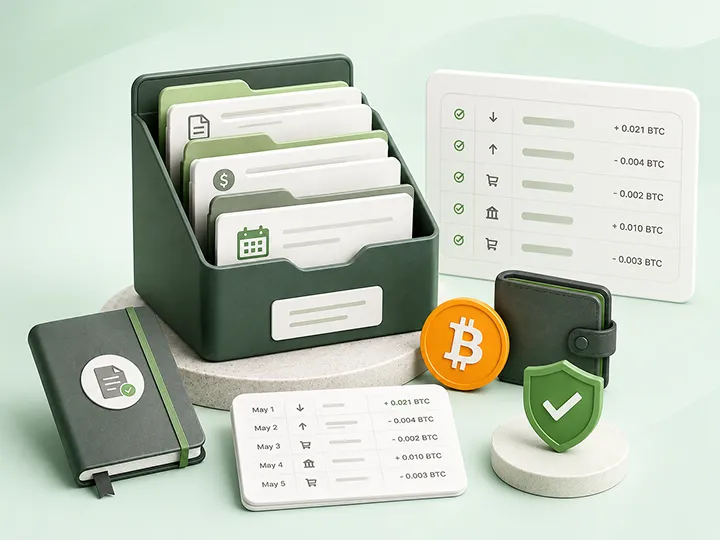
Bitcoin tax records
Use the field guide and checklist for the facts every Bitcoin record should preserve.

Enter your email to receive the free PDF checklist.
Read our Privacy Policy. For subscriber questions or corrections, use the Contact & Corrections page.
Bitcoin Tax Software
Bitcoin-only tax recordkeeping is narrower than broad crypto recordkeeping - and that is a real advantage. A Bitcoin-only holder does not track dozens of tokens, protocol positions, NFTs, bridges, smart contracts, or DeFi activity inside this page's scope. The recordkeeping surface is smaller and the categories are easier to understand.


Bitcoin-only tax recordkeeping is narrower than broad crypto recordkeeping - and that is a real advantage. A Bitcoin-only holder does not track dozens of tokens, protocol positions, NFTs, bridges, smart contracts, or DeFi activity inside this page's scope. The recordkeeping surface is smaller and the categories are easier to understand.
But narrower is not effortless. Recurring buys create many acquisition records; self-custody splits history across exchanges, wallets, on-chain records, labels, and notes; wallet movement needs context; cost-basis inputs need to stay connected. The core distinction is simple: Bitcoin-only narrows recordkeeping scope, but it does not make records simple and it does not decide tax treatment.
This is the Bitcoin-only framework page - the argument for why a Bitcoin-only history is narrower yet still demands discipline. For the general, field-by-field record guide (which facts to preserve for any event), that is the job of Bitcoin tax records; this page does not repeat it. It is educational only, not tax, legal, or financial advice; rules differ by jurisdiction and change over time. For the scope of the lane, read the Bitcoin tax disclaimer; for the map, start at the hub.
Bitcoin-only is a scope discipline: the records here focus on one asset. That boundary matters more than it first appears, because broad crypto recordkeeping is not just "more of the same" - it is a genuinely harder problem. More assets mean more sources, more transaction types, more protocol-specific facts, and more interpretation questions, and those multiply together rather than add up. Narrowing to Bitcoin removes that combinatorial explosion at the root, which is exactly why a clean habit is achievable for a Bitcoin-only holder in a way it often is not for someone spread across many tokens and protocols.
What it does not change is just as important. Holding only Bitcoin decides no treatment, and it does not make a single Bitcoin history live in a single place. The advantage is a smaller field to keep clean - not a field that stays clean on its own, and not a shortcut around recordkeeping. Bitcoin-only removes the hardest kind of complexity; it does not remove the work.
A Bitcoin-only holder can still end up with a messy history, for entirely ordinary reasons: recurring buys over months or years, more than one exchange account, withdrawals into self-custody, more than one wallet, wallet migrations, old addresses or devices, deposits back to an exchange, incomplete labels, unpreserved fees, transaction IDs without purpose notes, and acquisition records separated from later movement. None of that makes a holder careless - it means Bitcoin-only records can fragment quietly if they are not kept deliberately.
The reason is worth stating plainly, because it is the heart of this page: the difficulty of a Bitcoin-only history is not that the asset list is long. It is that one Bitcoin history can live in several places - an exchange, a wallet, the blockchain, and your own notes - and the job is keeping those places connected over time. That is a smaller problem than broad-crypto chaos, but it is not a trivial one, and it does not solve itself.
Recurring buys feel simple because the habit is automatic - but each buy is a separate acquisition record. Buy every week and you do not have one annual purchase; you have many dated ones, each with its own date, amount, source-shown value, fee, and source. That is fine if you preserve the data as you go, and painful if it has to be reconstructed later from partial exports, bank records, or memory. A vague average purchase price in a personal note may help you understand your position at a glance, but later software or qualified review may need the actual record behind each acquisition - the average is not a substitute for the underlying records. (For why acquisition records matter as a cost-basis input, see Bitcoin cost basis basics.)
Self-custody is part of holding Bitcoin well, and it changes the recordkeeping job. While Bitcoin sits inside one exchange account, more history may be visible in one system. Once it moves to your own wallet, the trail splits: the exchange may hold the purchase, withdrawal, fee, and acquisition record; the wallet may hold the receipt, later movement, labels, transaction IDs, and on-chain fees; the blockchain confirms the transaction; and your own notes may be the only place that explains whether the receiving wallet was yours and why the movement happened. No single source automatically explains the whole story - which is the same reason a Bitcoin-only history, despite being narrow, still needs deliberate connecting. (For how exchange and wallet records complement each other, see exchange CSV vs wallet history; for the movement boundary itself, see wallet transfer vs taxable event.)
Bitcoin is not tracked like a simple running bank-account balance inside the protocol. At a conceptual level, a wallet balance can be made up of separate spendable pieces left over from earlier transactions - commonly called UTXOs. You do not need coin-control skills, privacy techniques, or transaction-optimisation guidance to grasp the one recordkeeping implication that matters here: later wallet movement may involve Bitcoin that came from earlier acquisitions or earlier wallet transactions, so your record trail should help connect a later movement back to the earlier source records it came from.
That is the entire reason this page mentions UTXOs - not to advise on how to manage them, which is out of scope, but as a reminder that Bitcoin movement can be made of pieces that each have a history, and your records should preserve enough context to follow those pieces. This is a conceptual note, not a technique.
The fields to capture for each event are the same ones covered on the records page; what is Bitcoin-only-specific is where those fields tend to fragment and which habits keep them connected:
For the full field-by-field list behind these habits, see Bitcoin tax records.
Software depends on the records supplied to it. Clean Bitcoin-only records help it connect sources - exchange purchases to withdrawals, withdrawals to wallet receipts, movement to transaction IDs, fees to their events, labels to purpose, old wallets to later movement. It may need that context; it should not be assumed to know wallet ownership, purpose, completeness, or treatment, and a report can look organised while the record set is incomplete - which is why recordkeeping comes before software confidence. The same records make qualified review more grounded: a professional can see which sources exist, which may be missing, how acquisitions connect to later movement, which wallets were yours, and which uncertainties need review. (For how software falls short, see Bitcoin tax software limitations; for the professional boundary, see when to use a tax professional.)
This page is deliberately Bitcoin-only. It does not cover altcoin, DeFi, NFT, token-trading, staking, lending, bridge, or smart-contract treatment - naming those is only a boundary, not guidance about them. It also does not tell you how your Bitcoin will be treated, whether an event is taxable, which cost-basis method to use, how to file, how to respond to a notice, which software to choose, or which professional to hire. It helps you preserve Bitcoin-only facts so later software or qualified review has something coherent to work from.
Bitcoin-only recordkeeping is part of holding well - it belongs beside custody, backup discipline, wallet labelling, recovery planning, and careful transaction habits, not as an afterthought that begins the day software asks for an import file. The work is much smaller when done close to the event: label the wallet when you create it, export exchange history while access is easy, preserve transaction IDs as movements happen, write purpose notes while the reason is obvious, connect withdrawals to receipts while both records are easy to find, and mark uncertainty honestly instead of inventing certainty later. That is the holder standard applied to records: preserve facts while they are fresh enough to preserve well, so that a narrow history stays a clean one.
Bitcoin-only recordkeeping narrows the problem; it does not make it disappear. You still need acquisition records, wallet context, transaction IDs, fees, labels, purpose notes, and uncertainty notes - recurring buys create many records, self-custody splits the trail, and on-chain data confirms movement but not purpose or treatment. The Bitcoin-only advantage is a smaller field to keep clean, kept clean by deliberate habits. Records preserve facts; they do not decide treatment.
For the full tax-scope boundary, see the Bitcoin tax disclaimer.
Does Bitcoin-only mean my tax records are simple? Not automatically. Bitcoin-only narrows the scope to one asset, but recurring buys, self-custody, multiple wallets, exchange records, wallet history, fees, labels, and missing context can still make the work serious.
What is Bitcoin-only tax recordkeeping? The practice of preserving factual records for Bitcoin activity only - acquisitions, wallet movement, fees, transaction IDs, labels, source and destination records, cost-basis inputs, and purpose notes. It is a scope discipline, not a tax conclusion.
Do I need a separate record for each recurring buy? Yes. Each buy should be its own acquisition record, with its own date, amount, source-shown value, fee, and source. Keeping them as they happen is far easier than reconstructing a long recurring-buy history later.
Is moving Bitcoin to my own wallet covered here? The movement should be recorded - sending source, receiving destination, transaction ID, fee, wallet labels, and a note. This page decides no treatment; it explains why a Bitcoin-only history still needs the movement connected across sources.
What should I record for each Bitcoin transaction? The same fields covered on the records page: date, time, amount, source-shown value if available, fee, source, destination, transaction ID if on-chain, label, purpose note, and any uncertainty. See Bitcoin tax records.
Can tax software handle Bitcoin-only records automatically? It can organise and calculate from supplied records, but it should not be assumed to know wallet ownership, purpose, completeness, or treatment. Clean Bitcoin-only records improve input quality; they do not remove the need to review uncertain facts.
Does this page cover altcoins, DeFi, NFTs, or token trading? No - those are outside this Bitcoin-only framework. Activity beyond Bitcoin may raise different questions and may need qualified professional review.
Use the field guide and checklist for the facts every Bitcoin record should preserve.

Understand cost basis as a recordkeeping input, not a method choice or treatment verdict.
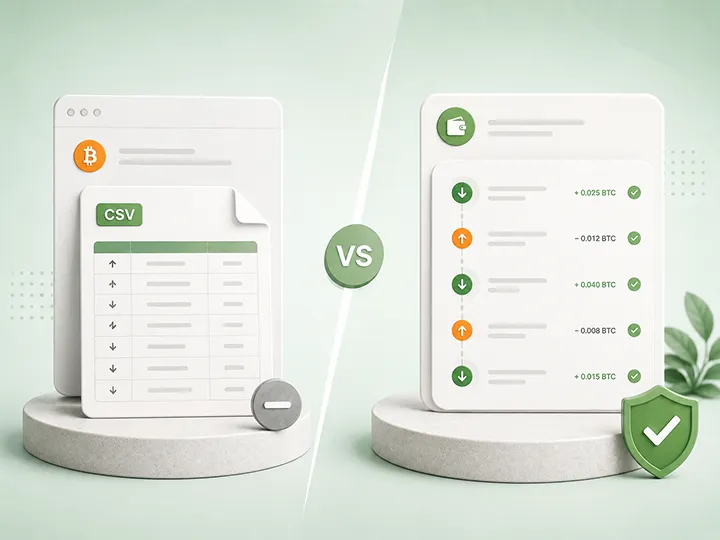
Reconcile exchange exports, wallet history, on-chain records, and your own labels.
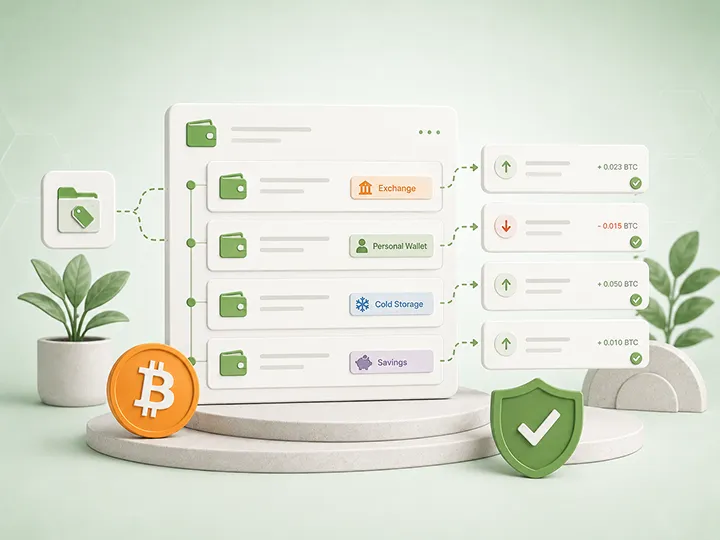
Preserve ownership, purpose, source, destination, and uncertainty without recording wallet secrets.