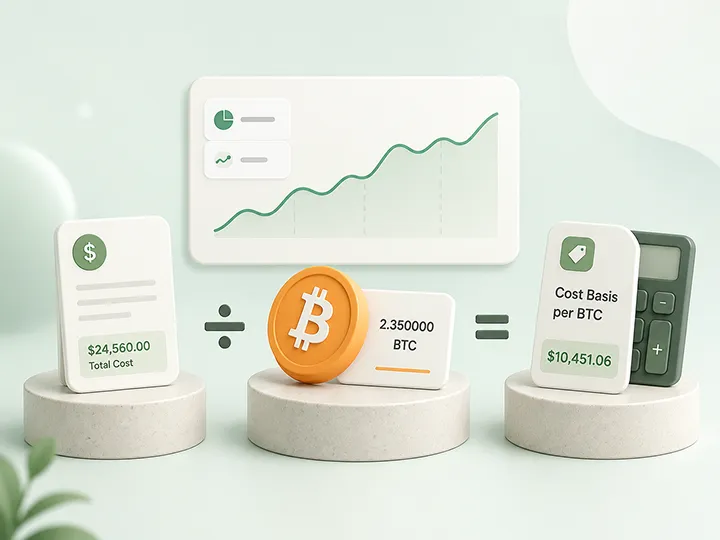
Bitcoin cost basis basics
Understand cost basis as a recordkeeping input, not a method choice or treatment verdict.

Enter your email to receive the free PDF checklist.
Read our Privacy Policy. For subscriber questions or corrections, use the Contact & Corrections page.
Bitcoin Tax Software
A Bitcoin transaction on the blockchain and a tax-review event are not the same thing. When you withdraw Bitcoin from an exchange to a hardware wallet, move coins between wallets, consolidate addresses, or send Bitcoin back to an exchange, the blockchain records movement. It does not record why the movement happened, whether the receiving wallet is yours, or your intent - and it does not decide tax treatment. That is why wallet-transfer records matter.
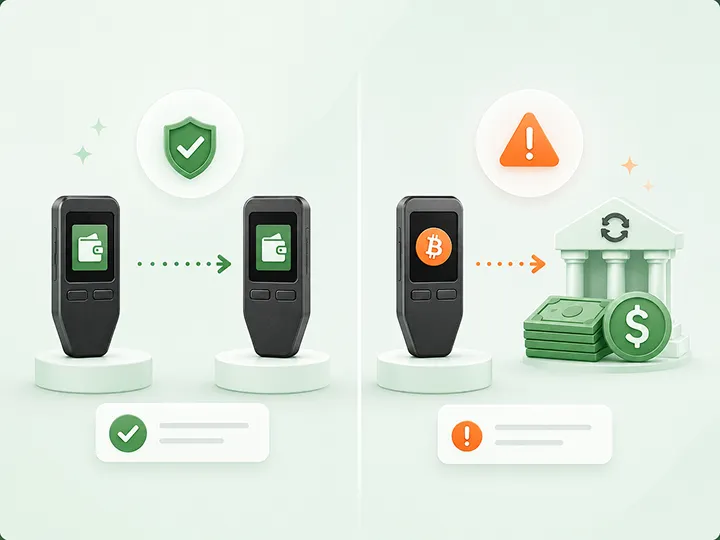

A Bitcoin transaction on the blockchain and a tax-review event are not the same thing. When you withdraw Bitcoin from an exchange to a hardware wallet, move coins between wallets, consolidate addresses, or send Bitcoin back to an exchange, the blockchain records movement. It does not record why the movement happened, whether the receiving wallet is yours, or your intent - and it does not decide tax treatment. That is why wallet-transfer records matter.
The core distinction is simple: a wallet-transfer record preserves what happened; it does not decide tax treatment. This page is about the records a movement needs - the facts that make it reviewable later. It is educational only, not tax, legal, or financial advice; rules differ by jurisdiction and change over time. For the disposal-versus-transfer concept, the hub covers it; for the full scope boundary, read the Bitcoin tax disclaimer.
The blockchain can show that Bitcoin moved. It cannot show the full meaning of that movement - and that gap is the entire reason this page exists.
A transaction ID can show when a transaction was confirmed, how much Bitcoin moved, which addresses were involved, and what fee was paid. It cannot show whether the sending or receiving wallet was yours, whether the movement was a transfer, sale, spend, gift, donation, or payment, which earlier acquisition connects to the coins, or how any rules apply to your situation. The same visible on-chain movement can carry completely different meanings depending on facts the blockchain never records.
Those facts are the recordkeeper's job. This page decides none of the meanings - it explains what to preserve so the meaning can be established later, by you, by software, or by a qualified professional, from records rather than from memory.
Consider the most common movement of all. You buy Bitcoin on an exchange, then withdraw it to a hardware wallet you control. On-chain, this is one transaction. In your records, it is two sides that must be reviewed together:
Now watch what happens when only one side survives. If only the wallet side is later imported into software, the coins appear to arrive with no acquisition context, and the tool may flag missing cost basis or treat the receipt as if the coins came from nowhere. If only the exchange side is imported, the withdrawal appears with no destination context, as if the coins simply left. Neither picture is wrong - each is exactly half of one story, and half a story is where confusion and unnecessary review begin.
This page does not say whether this movement is taxable or non-taxable in your jurisdiction; that depends on facts and rules outside this page. The recordkeeping point is narrow and durable: keep both sides connected - withdrawal to receipt, matched by the transaction ID, with the fee preserved and a label attached - so whoever reviews the record can see the whole movement. (For why the acquisition record is the input most likely to be left behind, see Bitcoin cost basis basics.)
Holders move coins for ordinary reasons: withdrawing into self-custody, moving from a mobile wallet to a hardware wallet, migrating to a new wallet after generating a new seed phrase, consolidating addresses, or sending coins back to an exchange before deciding what to do next. Each is a normal part of holding Bitcoin - and each creates a question that should be answerable later without guessing: what happened, and why?
A clean record answers it. An unrecorded or unlabeled movement leaves a future reviewer - possibly you - staring at an address change with no explanation. The record does not decide treatment; it preserves the facts and context that keep a normal movement from becoming an unexplained entry.
Software works from the data you give it, and if the data is incomplete it may not understand a movement the way you do. That can happen when one side of a transfer is imported but the other is missing, a wallet is not connected, an exchange export is partial, the receiving address is not labeled as yours, or a movement has no purpose note. Different tools handle imports and labels differently, so this page makes no universal claim - but the durable point holds: software needs context, and without it, it may produce warnings, gaps, duplicate-looking entries, or classifications that need review. That does not automatically mean the software is wrong; it may mean it is working from incomplete facts. (For what a tool can and cannot do, see what tax software can and cannot do; for how it goes wrong, see Bitcoin tax software limitations.)
A transfer between two places you control and a movement to someone else are different factual situations - and the blockchain does not know the difference. Your records have to preserve it. Ownership context can come from the exchange withdrawal record, the receiving-wallet label, a wallet export, a contemporaneous note, a transaction ID paired with the wallet name, or your own files. Do not rely on memory; a note written at the time is worth more than a reconstruction made months later, because the reason is still obvious now and will not be then.
A transaction ID is a useful anchor, not the whole record. It does not explain purpose, show acquisition history, prove the receiving address was yours, or indicate whether the movement later needs review. A stronger record combines the transaction ID with date and time, amount, sending source, receiving destination, network fee, wallet or account labels, a purpose note, the source record, and the connection to earlier acquisition records where relevant. (For the labeling system that carries this context - including the "uncertain, needs review" label and the wallet-secret safety rule - see wallet labeling for tax records.)
For a wallet transfer, preserve enough facts to explain both sides of the movement: date and time, amount, sending source, receiving destination, transaction ID if on-chain, fee, a label for each wallet, a purpose note, whether both accounts are yours, and any supporting export. Keep the labels practical, not clever - for example "exchange withdrawal to cold storage," "mobile wallet to hardware wallet," "wallet consolidation," "deposit back to exchange," or "transfer between my wallets."
Some outgoing movements may need more context than a simple transfer. This page does not decide whether any outgoing movement has tax consequences; it explains what to preserve when one might need review: date and time, amount, destination, transaction ID, fee, source wallet or exchange, a purpose label, what (if anything) was received, a source document or note, and the connection to earlier acquisition records. Purpose labels might include "sent to exchange," "spent," "sold," "gift," "donation," "payment sent," "payment received," or "wallet migration." When you are not sure what a movement means, label the facts rather than inventing a treatment, mark it "uncertain - needs review," and preserve the record for qualified review. Guessing a treatment and recording it as fact is the one move that turns a recoverable gap into a misleading record.
Wallet movements often include network fees - record them. Preserve the amount, transaction ID, date, and the movement each fee relates to; a fee that is not recorded can create confusion later, while a fee that is recorded gives software or a professional more complete facts. This page does not decide how a fee is treated.
A recordkeeping page can help you preserve facts; it cannot interpret them for you. The question may need qualified review when you cannot tell whether a destination was yours, old exchange records are missing, wallet and exchange history do not line up, a software import produces unexplained gains or missing records, you sent Bitcoin to another person or organization, you received Bitcoin as payment, income, gift, or reward, or the amount makes guessing irresponsible. The safe boundary: records preserve facts; a qualified professional interprets them under the rules that apply to you. (See when to use a tax professional.)
For each movement, ask one question: can I explain this later without guessing? A good record answers what moved, when, from where, to where, whether the destination was mine, why it moved, what transaction ID supports it, what fee was paid, which earlier acquisition record is relevant, and whether it needs qualified review. If you can answer those from records, the movement is easy to review later. If you cannot, do not invent an answer - identify the gap, preserve what you can, mark the uncertainty, and decide whether it needs better records, better labels, or qualified help. The goal is not to become a tax expert; it is to stop normal Bitcoin wallet movements from becoming unexplained entries.
Is moving Bitcoin between my own wallets a taxable event? This page gives no taxable or non-taxable conclusion. The recordkeeping point is that a movement between wallets needs enough context to show what happened and who controlled the wallets. Whether it has tax consequences depends on the rules and facts for your situation.
Why does tax software show a gain on a wallet transfer? It may be working from incomplete records - one side missing, a wallet not imported, or an unlabeled destination. Different tools behave differently; the durable fix is better records and labels, not assuming the first import is final.
Why does a hardware-wallet withdrawal create missing-cost-basis warnings? A withdrawal can separate exchange-visible purchase history from later wallet history. If software sees the receipt but not the acquisition record, it may show a missing-data warning. Preserve the acquisition record, withdrawal record, transaction ID, and receiving-wallet label.
Does a transaction ID prove a transfer was between my own wallets? No. It proves an on-chain transaction happened; it does not prove ownership, purpose, or treatment. You need labels, wallet records, exchange records, and notes for that context.
What records should I keep for a wallet transfer? Date, time, amount, sending source, receiving destination, transaction ID, fee, wallet labels, and a purpose note. If both accounts are yours, preserve the context that shows that.
Should I record network fees on wallet transfers? Yes. Preserve the fee amount, date, transaction ID, and the event it relates to. This page does not decide how fees are treated.
When should I ask a qualified professional? When facts are unclear, records are missing, software output looks wrong, coins were sent to or received from another person or organization, or the situation depends on rules this page cannot evaluate.
Understand cost basis as a recordkeeping input, not a method choice or treatment verdict.
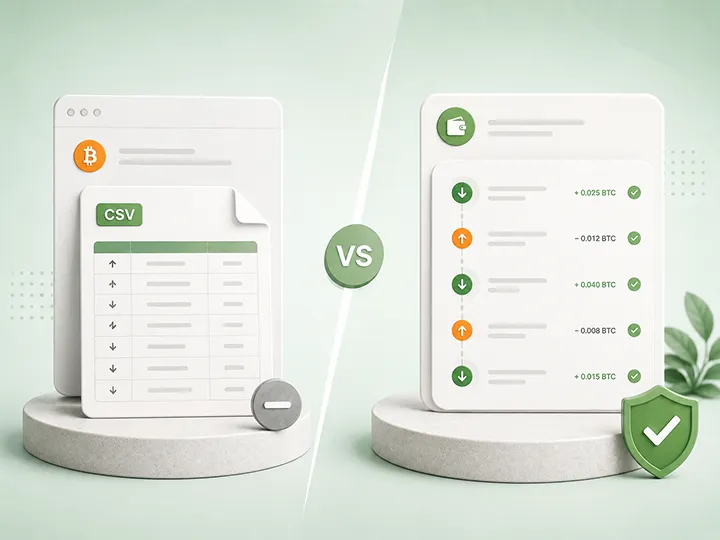
Reconcile exchange exports, wallet history, on-chain records, and your own labels.
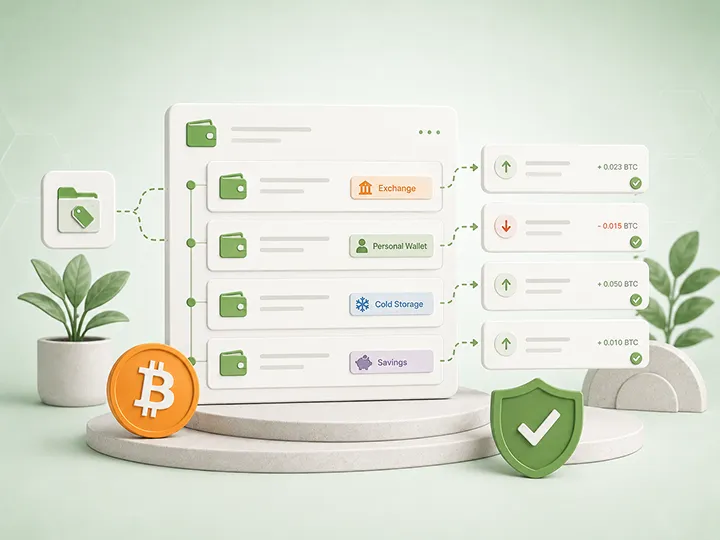
Preserve ownership, purpose, source, destination, and uncertainty without recording wallet secrets.
Separate recordkeeping work from judgment questions that may need qualified review.