Seed Phrase Storage

Bitcoin Emergency Recovery Plan: What To Prepare Before Something Goes Wrong

A calm framework for a Bitcoin emergency recovery plan: what to prepare, what to document safely, and what to never expose before anything goes wrong.

  • Emergency planning
  • Safety calibration
  • No recovery walkthrough
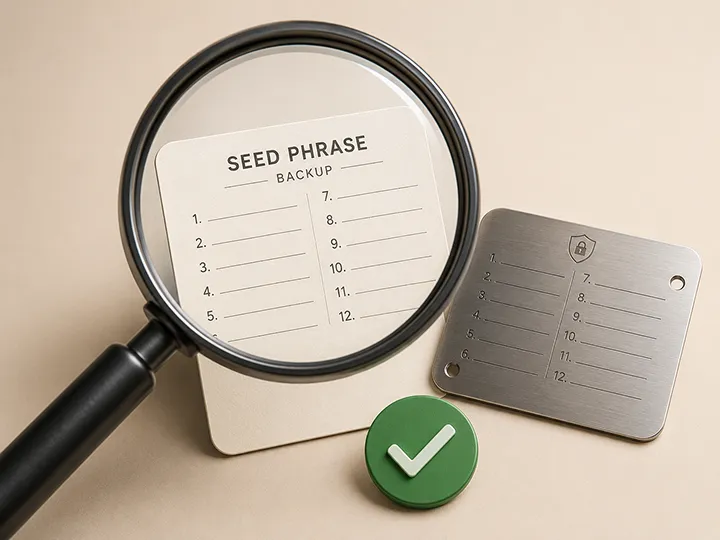
Seed phrase storage thumbnail showing a seed phrase card, metal backup plate, hardware wallet, and security icons.
Frederick Staunch avatar

Author and experience

Written by Frederick Staunch

Frederick Staunch is the pseudonymous editor of Bitcoin Plaster. He teaches the Bitcoin Holder Standard: money literacy, the Bitcoin thesis, holder psychology, and self-custody for people who want to hold Bitcoin without expensive mistakes.

Bitcoin self-custody and key control

Hardware wallet setup and testing

Recovery and backup planning

Bitcoin-only product evaluation

Bitcoin tax-record workflows and tax-software evaluation

Money literacy and sound money

Holder psychology and volatility

Quick answer

Prepare safe information before stress makes decisions harder.

A Bitcoin emergency recovery plan should explain what exists, what to do first, who can help, and what must never be done. It should not contain your seed phrase.

A Bitcoin emergency recovery plan should prepare for situations like a broken wallet, lost device, damaged home, missing backup, injury, incapacity, death, family confusion, or a moment of panic.

The plan should document safe information: that Bitcoin exists, the general setup, where non-secret instructions begin, which official documentation to use, and who can provide non-secret help.

The plan must not document the secret material itself: no seed phrase, passphrase, private key, device PIN, exact recovery path, or wallet restore instructions inside the plan.

1

Awareness

The right person knows that Bitcoin exists and that there is a non-secret plan without receiving the seed phrase.

2

Instructions

The plan explains what exists, what to do first, which official documentation matters, and what must never be done.

3

Secret material stays separate

Seed phrases, passphrases, private keys, PINs, and exact recovery paths stay offline, protected, and outside the plan.

Safety boundary

The emergency plan should reduce panic. It should not create a new place where secrets can leak.

This page does not require your real seed phrase, passphrase, wallet backup, private key, or PIN. Do not type, photograph, scan, upload, email, cloud-store, password-manager-store, AI-tool-enter, or paste a real seed phrase or passphrase while making an emergency plan.

Do not put secrets into documents

  • a legal document
  • a will document
  • a trust document
  • an online document
  • a computer file
  • a shared note

Do not put secrets into connected tools

  • a website
  • a phone camera
  • a password manager
  • cloud storage
  • email
  • connected software

Do not send secrets to people or services

  • chat apps
  • AI tools
  • random recovery tools
  • recovery services
  • unknown support agents
  • public forums
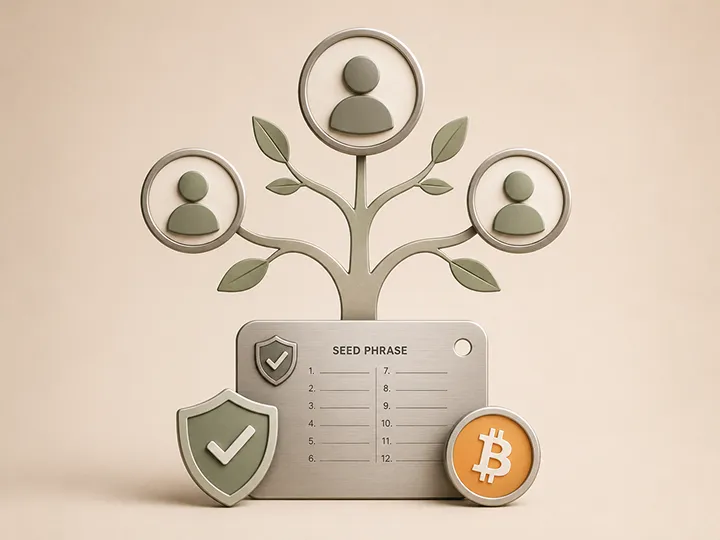
Seed phrase storage thumbnail showing a secure lockbox, backup card, metal plate, and checklist.

Before stress

Why emergency recovery needs a plan before the emergency

Emergencies are where self-custody mistakes become more likely.

A calm person can slow down, check official documentation, and avoid untrusted tools. A stressed person may search for help, click the first result, call a fake support number, trust a stranger, or type recovery words into the wrong place.

The goal is not to predict every possible emergency. The goal is to decide the most important boundaries before stress changes your judgment.

You are not writing this plan because an emergency is likely tomorrow. You are writing it because the cost of improvising under pressure can be permanent.

  • What exists?
  • Where do safe instructions begin?
  • What should never be typed or shared?
  • What official documentation should be used?

Definition block

An emergency recovery plan is a map. It is not the key.

The plan helps future-you or a trusted person understand what exists, where official documentation starts, who can provide non-secret help, and what should never happen. It is not the secret material itself.

The plan is

A written, non-secret framework

  • It explains what exists and where safe instructions begin.
  • It identifies official documentation and non-secret help.

The plan is not

A secret-copy document

  • It is not your seed phrase written somewhere just in case.
  • It is not a wallet restore walkthrough or device-specific recovery guide.

The boundary is

A map, not the key

  • The plan should help the right person find the right process.
  • It should not give every reader of the plan the power to move the Bitcoin.

Planning framework

Separate awareness, instructions, and secret material

Most unsafe plans fail by mixing these layers. If the plan contains the seed phrase, it is no longer just a plan. It is a copy of the secret.

Layer 1

Awareness

  • The fact that Bitcoin and a plan exist.
  • Can be shared with the right people.

Layer 2

Instructions

  • Non-secret guidance about what to do and what not to do.
  • Can be documented carefully.

Layer 3

Secret material

  • Seed phrase, passphrase, PIN, private keys, and exact recovery path.
  • Stays offline, protected, and separate.

Emergency categories

Emergencies your plan should account for

You do not need separate procedures for every possible event, but your plan should account for the main categories of self-custody failure without becoming a live recovery walkthrough.

Emergency category

Wallet device lost, broken, or reset

  • Clarify where official documentation starts and where the backup process is described.

Emergency category

Backup cannot be found or is damaged

  • Clarify what non-secret checks should happen before panic begins and where safe verification guidance starts.

Emergency category

Home is damaged

  • Clarify whether every recovery item depends on one location.

Emergency category

You are injured, incapacitated, or die

  • Clarify who knows a plan exists and where safe instructions begin.

Emergency category

A backup may have been seen by someone else

  • Clarify where exposure guidance begins without improvising.

Emergency category

Someone receives suspicious support or recovery help

  • The plan should say to stop before sharing seed words.

Safe documentation

Information your plan can safely document

Useful planning information does not have to be secret. The plan can include non-secret context and warnings that help protect the secret without revealing it.

  1. Plain-language awareness

    A statement that Bitcoin is held in self-custody, the general type of wallet or setup, and where non-secret instructions begin.

  2. Official documentation path

    Where to find wallet-maker guidance and which official documentation should be used for real wallet-specific recovery.

  3. Non-secret help and warnings

    Who can provide non-secret help, what not to do with seed words, and what page or document should be read first.

  4. Review context

    Whether a passphrase, split backup, or advanced structure exists at a high level, plus when the plan was last reviewed.

Red lines

Information your plan must never contain

Do not make the plan a secret-copy document. If you feel tempted to include the seed phrase because it would make recovery easier, pause. You are solving one problem by creating a bigger one.

Secret material

  • seed phrase words
  • passphrases
  • private keys
  • device PINs
  • exact recovery paths
  • exact hidden locations that make theft easy

Action instructions

  • wallet restore steps
  • signing instructions
  • transaction instructions
  • instructions to move funds during an emergency
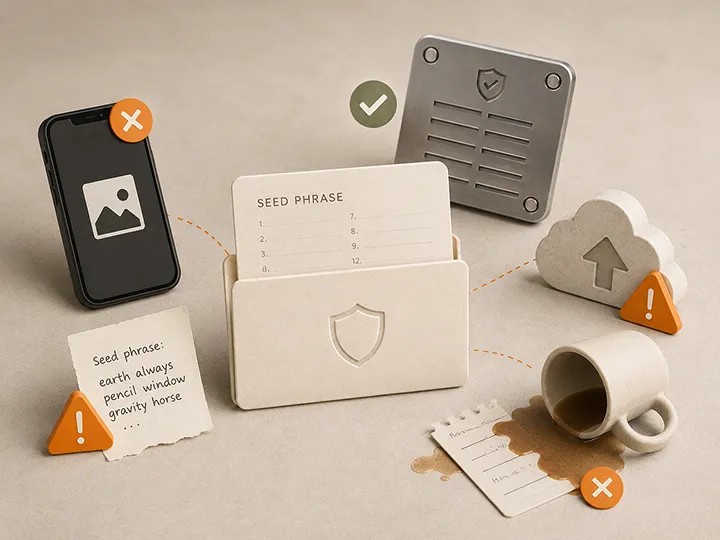
Seed phrase safety thumbnail showing unsafe digital and casual storage locations to avoid.

Awareness layer

A plan no one can find may fail just as completely as no plan.

The right person may need to know that Bitcoin exists, that there is an emergency plan, where non-secret instructions begin, who can help, and what not to do.

That person might be a spouse, partner, adult child, executor, trusted friend, or technically capable helper. The right answer depends on your situation.

Knowing that a plan exists is not the same as seeing the seed phrase.

This distinction is essential. You may decide that a trusted person should know there is a plan. That does not mean they should have casual access to secret material while you are alive and capable.

Review Bitcoin inheritance basics

Panic prevention

A good emergency plan slows the moment down.

The most important line in the plan can be simple: if unsure, stop before entering seed words anywhere. This page does not provide active theft response or fund-movement instructions.

  • Fake wallet support

    Panic can push people toward fake support, fake recovery services, scam browser extensions, or phone numbers from ads.

  • Seed-word prompts

    Tools, websites, strangers, and unsolicited helpers that ask for seed words should be treated as red lines.

  • Wrong recovery path

    Use official wallet documentation and stop before exposing secrets when unsure.

  • Scope boundary

    This page does not provide active theft response, fund-movement instructions, forensic advice, law-enforcement advice, or legal advice.

Seed phrase backup testing thumbnail showing a recovery phrase card and safety checklist.

Backup confidence

How the plan connects to seed phrase verification

An emergency plan built on an unverified backup can create false confidence.

Before a real emergency, you should know whether the backup is complete, readable, in the correct order, associated with the right wallet, physically intact, and stored in a way that makes sense.

That does not mean typing the seed phrase into random software. It means using a safe verification process.

Start with how to verify your seed phrase backup. If a dedicated checklist becomes live later, it can support this step, but the plan should not depend on a checklist that has not been published or confirmed.

Verify your backup safely

Related planning

A recovery drill and a family plan are related, but they are not this page.

The plan explains what exists and what not to do. A drill rehearses safe parts of the process before stress appears. This page does not teach the drill, and the dedicated drill route is deferred until it exists in the repo.

A plan that only you understand is incomplete if anyone else may need to act later. Family-facing instructions should explain the non-secret parts: Bitcoin exists, do not enter seed words online, do not ask strangers for recovery help, do not photograph recovery words, use official documentation, and get qualified help for legal, tax, or estate questions.

Gap response

What to do when the plan reveals a gap

A planning session often reveals weaknesses. That is not a failure. That is the point. Fix one gap at a time, and do not move secret material into digital systems for convenience.

  1. Nobody knows Bitcoin exists

    Create awareness without sharing seed words.

  2. Backup has never been checked

    Use safe backup verification before trusting the plan.

  3. Backup location lives only in memory

    Improve non-secret documentation without revealing secret material.

  4. Every recovery item is in one place

    Revisit storage location and threat-model assumptions.

  5. Passphrase exists but is not in the plan

    Review passphrase recovery risk without exposing it casually.

  6. Split backup is confusing

    Revisit whether the split is recoverable by future-you or the right person.

  7. Family would not know what to do

    Use inheritance basics now and defer family instructions until that dedicated route exists.

  8. Legal or tax side is unclear

    Talk to qualified professionals. Do not give them your seed phrase or passphrase to answer legal or tax questions.

Scope boundary

What if the backup is already missing or exposed?

This page is about preparing before something goes wrong. If something has already gone wrong, do not improvise from this page.

If you cannot find the backup, use dedicated loss guidance when that page is available.

If someone else may have seen, copied, photographed, or found the seed phrase, use dedicated exposure guidance when that page is available.

If those pages are not live yet, the immediate safety principle is still the same: stop before entering seed words anywhere, avoid unverified tools and unsolicited help, and use official wallet documentation or qualified support channels that do not ask for your seed phrase.

Practical checklist

The practical emergency plan checklist

Use this checklist without writing or entering your seed phrase anywhere. If the answer to several questions is no, you have useful work to do before an emergency happens.

  1. Does the right person know Bitcoin exists?

    Awareness should not depend on luck or emergency guesswork.

  2. Does a non-secret emergency plan exist?

    The plan should help without containing recovery words or exact recovery paths.

  3. Does the plan explain what not to do with seed words?

    A stressed person should see clear red lines before using tools, websites, apps, or support channels.

  4. Does the plan point to official wallet documentation?

    Real wallet-specific recovery belongs in official documentation, not this article.

  5. Does the plan identify who can provide non-secret help?

    A helper should not need casual access to secret material to be useful.

  6. Is the seed phrase kept out of the plan?

    If the plan contains the seed phrase, it is a copy of the secret, not just a plan.

  7. Is any passphrase accounted for without being exposed?

    A passphrase can be recovery-critical without belonging in an ordinary plan document.

  8. Would a split backup or advanced setup make sense to someone else?

    A plan that only works when you are present and calm is incomplete.

  9. Has the backup been verified safely?

    A plan built on an unverified backup can create false confidence.

  10. Would the plan still work if your home were damaged?

    An emergency plan should not assume everything stays in one place and one condition.

Next step logic

Where to go next

The natural next step depends on the weakest part of your current setup. This implementation wires only live internal routes and defers missing sibling pages.

  1. If the backup itself is uncertain, start with verification.

    The backup should be complete, readable, ordered, associated with the right wallet, physically intact, and checked through a safe process.

  2. If the human side is weak, start with inheritance basics.

    Family-facing or trusted-person planning should preserve awareness and instructions without casually exposing secret material.

  3. If the current setup is built on shaky habits, review backup mistakes.

    Common backup mistakes can turn a plan into false confidence before an emergency appears.

Seed phrase storage thumbnail showing a secure lockbox, backup card, metal plate, and checklist.

Soft next step

Start with verification, inheritance awareness, and backup mistakes.

If you are unsure the backup itself is correct, start with how to verify your seed phrase backup.

If the human recovery side is weak, start with Bitcoin inheritance basics while the dedicated family recovery route remains deferred.

If the current setup is built on shaky habits, review seed phrase backup mistakes before making the emergency plan more complicated.

The calm version is this: an emergency plan should help the right person slow down, find safe instructions, avoid exposing secrets, and follow official documentation when real recovery is needed.

Review backup mistakes
Bitcoin Plaster circular mark

Planning rule

The plan should reduce panic.

It should help the right person slow down, find safe instructions, avoid exposing secrets, and follow official documentation when real recovery is needed.

  • No seed exposure
  • No recovery walkthrough
  • Official documentation boundary

Scope reminder

This is preparation, not a live recovery guide.

This page does not provide wallet restore steps, active theft response, transaction instructions, professional guidance, legal advice, tax advice, estate advice, probate advice, forensic guidance, law-enforcement guidance, incident-response advice, or device-specific recovery advice.

For real wallet-specific recovery, use official wallet documentation.

For legal, tax, estate, probate, incapacity, or jurisdiction-specific questions, consult qualified professionals.

FAQ

Bitcoin emergency recovery plan questions

Concise answers about non-secret planning, seed phrase separation, family awareness, emergency uncertainty, inheritance overlap, and recovery drills.

A Bitcoin emergency recovery plan is a non-secret framework that explains what exists, where safe instructions begin, who can help, and what must never be done. It prepares future-you or trusted people before stress makes decisions harder. It should not contain your seed phrase or wallet restore steps.